
Room in room
Alongside the acoustics within a room, sound transmission between rooms is something we encounter every day. Improving the acoustics of a room does not automatically improve its sound insulation. These two issues need to be considered separately, because sound, especially at lower frequencies, always finds a way into neighbouring rooms.
Sound transmission can only be prevented through structural decoupling. The more walls, floors and ceilings can be decoupled, the better. Ideally, a completely new room would be built inside an existing one. No other method achieves the same level of sound insulation. We offer planning advice for room-in-room construction, based on our experience of building our own spaces.
In an initial, no-obligation consultation, we establish whether the room you have in mind can be sound-insulated and what the work would involve.
Building acoustics overlooks reality
When discussing sound, terms are often confused. Talking about acoustics brings personal impressions into play, making an objective assessment difficult. Statements such as “This church has wonderful acoustics” or “The room sounds harsh” reflect individual perceptions. Yet these perceptions have a physical basis, including in musical contexts. That basis is not difficult to understand if we distinguish a few key terms.
When assessing sound, the first distinction is between sound travelling from one room to another and sound travelling within a room. Solving problems in these two areas requires different measures. They should be addressed separately.
In principle, sound transmission between rooms, or from indoors to outdoors and vice versa, falls under building acoustics. The measures required here concern sound insulation. Sound propagation within a room is known as room acoustics. Appropriate measures initially focus on sound absorption, although methods of distributing sound may also be relevant.
Building acoustics, the subject here, is usually the responsibility of architects and civil engineers, whose assessments relate to everyday residential use. In this context, sound propagation is only considered relevant from around 200 Hz upwards. Measurements are often taken at much higher frequencies, focusing on everyday sounds such as clattering dishes or children shouting. Most of the sound energy in music, however, lies in a frequency range largely ignored by the industry: the bass and the lower fundamental frequencies of voices and instruments. These are so dominant in a musical context that the sound insulation envisaged by industry standards cannot be achieved using conventional methods. The frequency range adopted by the industry as its frame of reference is set too high.
Typical sound insulation curves
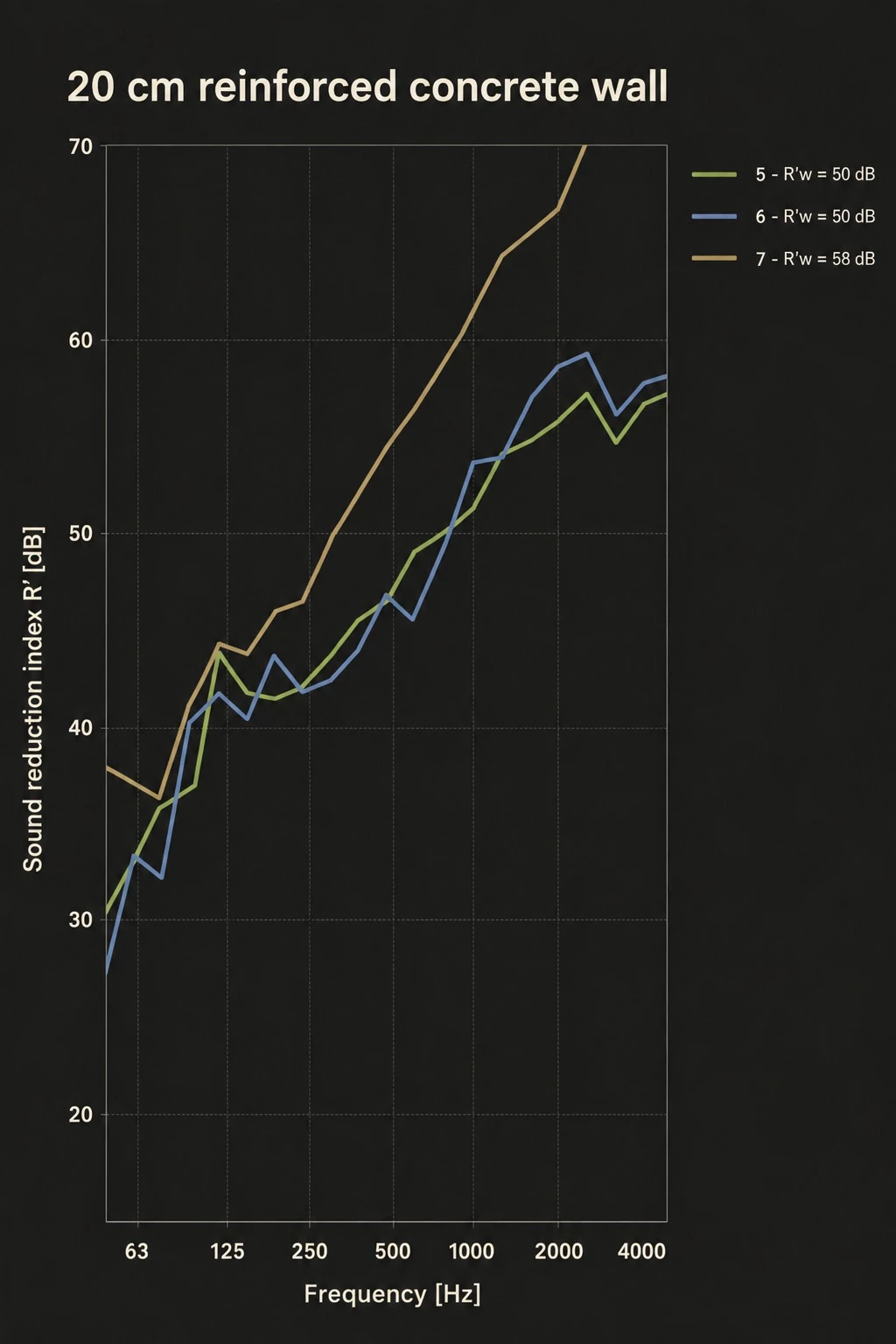
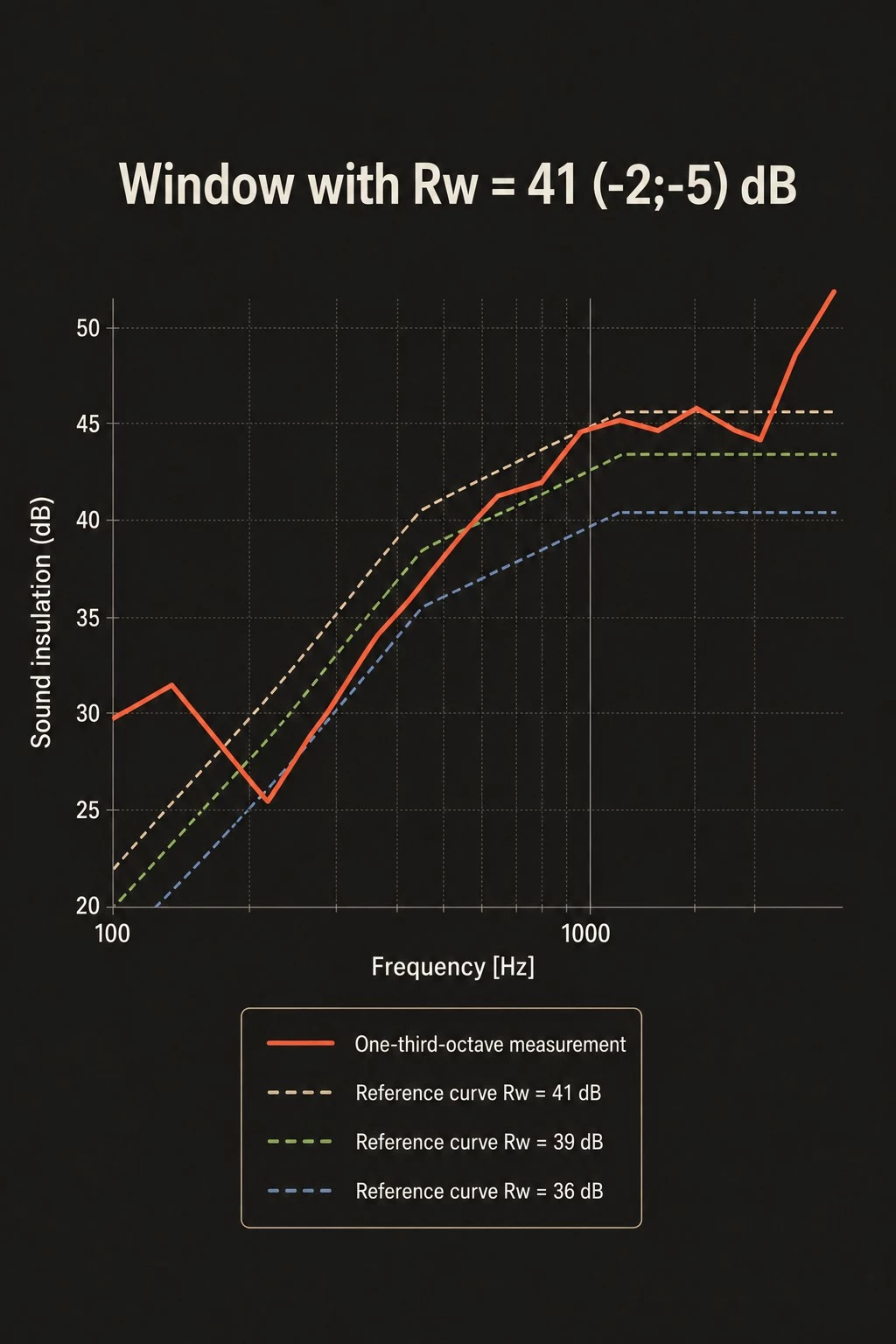
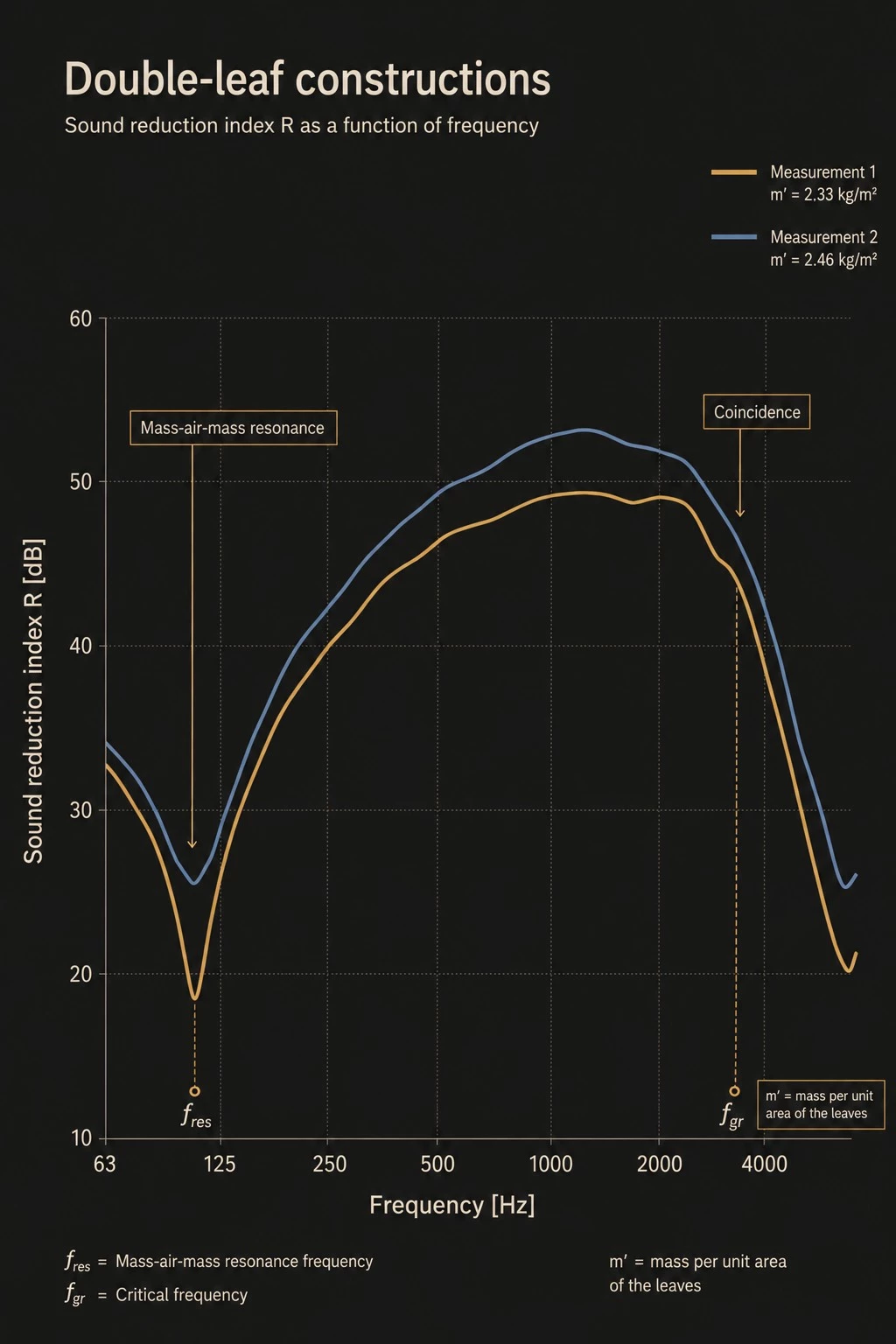
The rising curves make it clear that effective sound insulation only begins in the range from 500 to 2,000 Hz. Below these frequencies, in the lower midrange and bass, there is no sound insulation. Yet this is the central frequency range of music signals from loudspeakers or instruments. The bass in pop music occupies the range from 20 Hz to 200 Hz, while the peak just above 300 Hz represents the singer’s fundamental frequency range:
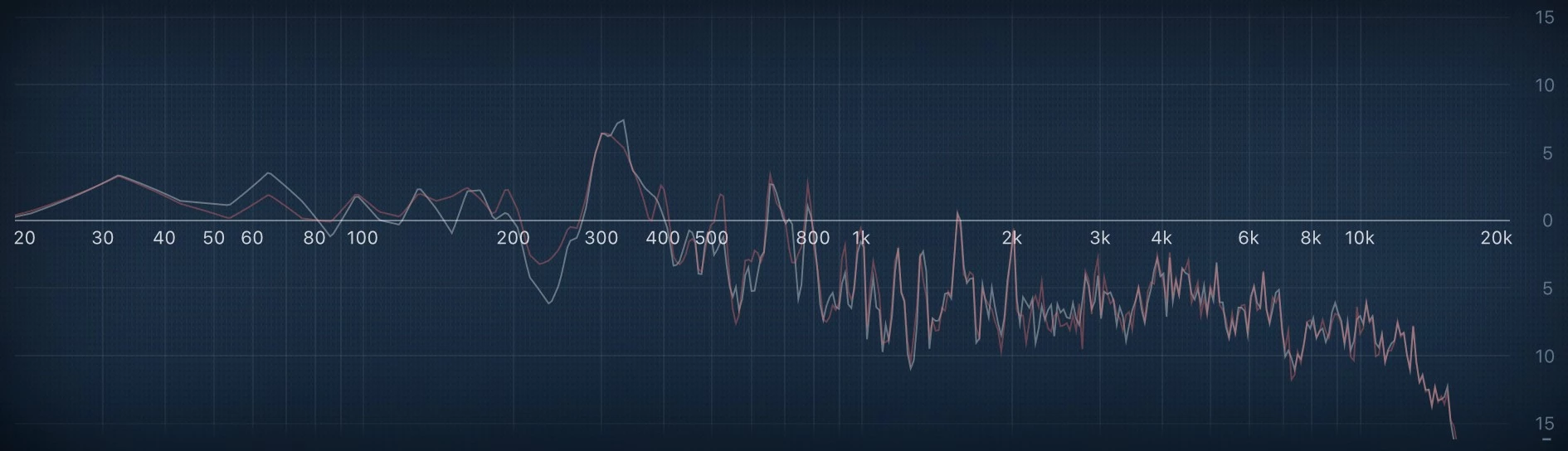
Conventional building structures are far from suitable for preventing these frequencies from travelling. There is also another pervasive problem: sound waves are transmitted not only through the nearest wall, but also through other adjoining parts of the building. This so-called flanking transmission is often underestimated.
Adding a secondary lining to a shared wall alone is not enough to prevent sound transmission. Effective sound insulation therefore requires room-in-room construction. This approach also makes it possible to address the bass and lower midrange. A carefully chosen combination of wall spacing and materials can provide insulation in the low-frequency range that matters for music.